UNESCO status
Saudi Arabia’s first UNESCO World Heritage Site, inscribed in 2008.
Explore AlUla · Hegra
A practical guide to Saudi Arabia’s first UNESCO World Heritage Site: what you’ll see, how the visit works, when to go and how to make the most of your time in Hegra.
Start here
Saudi Arabia’s first UNESCO World Heritage Site, inscribed in 2008.
Allow around two hours for the core experience, plus arrival and check-in time.
Visitors move between principal stops through an organized, guided site experience.
Earlier or later in the day is more comfortable in warmer months; winter is flexible.
Local tip: If you are visiting independently, arrange return transportation before you arrive. Hegra sits outside central AlUla, and a ride-hailing car may not be immediately available when the experience finishes.
The wider story
Hegra, historically known as Al-Hijr and widely associated with Mada’in Salih, became one of the Nabataean Kingdom’s most important southern cities. Its position connected ancient trade routes across Arabia with the wider Mediterranean and Near Eastern worlds.
The monumental rock-cut tombs are the most visible remains of that Nabataean period. Yet the landscape also preserves wells, inscriptions and evidence of a far longer human story. UNESCO records pre-Nabataean inscriptions and cave drawings here, alongside the architectural and water-management achievements of the Nabataeans.
That is why Hegra is best understood as part of the wider AlUla valley, not as an isolated monument. It is a place shaped by movement, trade, belief, craftsmanship and generations of people who travelled through this landscape.

A journey, not a single monument
For most travelers, Hegra becomes easier to understand as a sequence of places. Based on Abdullah’s current on-the-ground experience, a typical route may include the four principal stops below. Site routes and access arrangements may change according to official operations.
 01
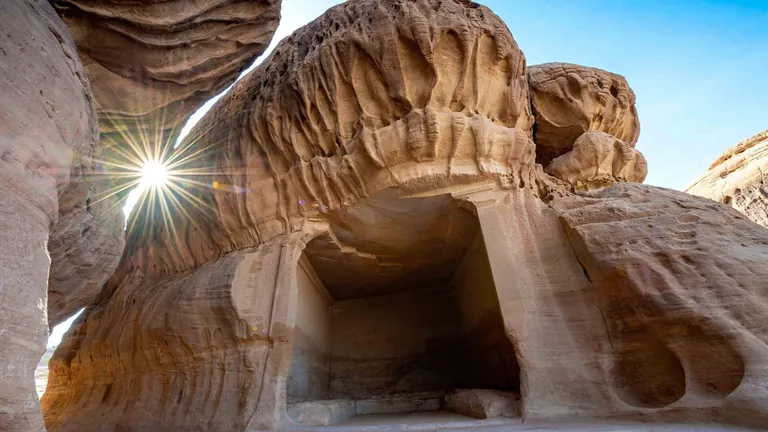
A place for gathering
A typical journey currently begins near Jabal Ithlib. Al Diwan is a large rock-cut chamber associated with gathering, hospitality and the social or ritual life that surrounded Hegra’s monuments. Nearby passages, inscriptions and sanctuaries add another perspective to the site.
Takeaway: Hegra was more than a cemetery. It was a living society with places for meeting, belief and community.
 02
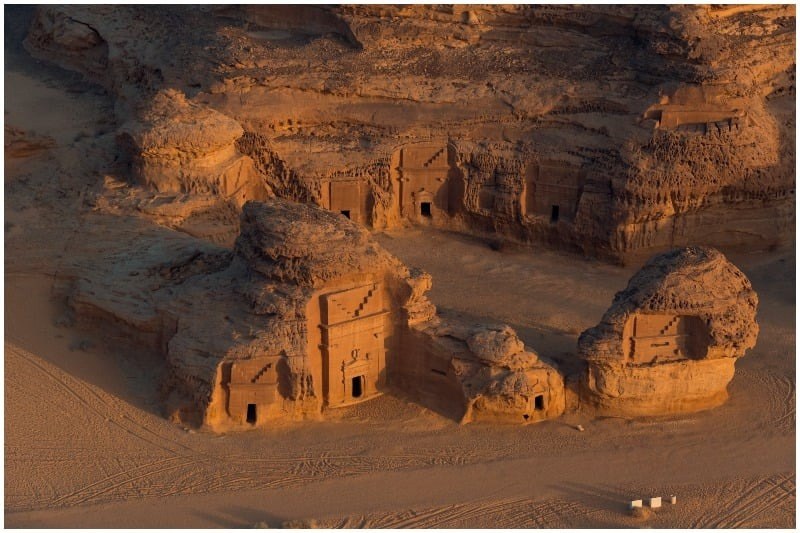
A landscape of monumental façades
Jabal AlBanat contains one of Hegra’s most impressive concentrations of monumental tombs. Its façades, inscriptions and decorative details help reveal the people who commissioned the monuments, their families and the society in which they lived.
Takeaway: Subject to current site access, visitors can normally experience the interior of an accessible tomb here, which feels very different from viewing the façades outside.
 03
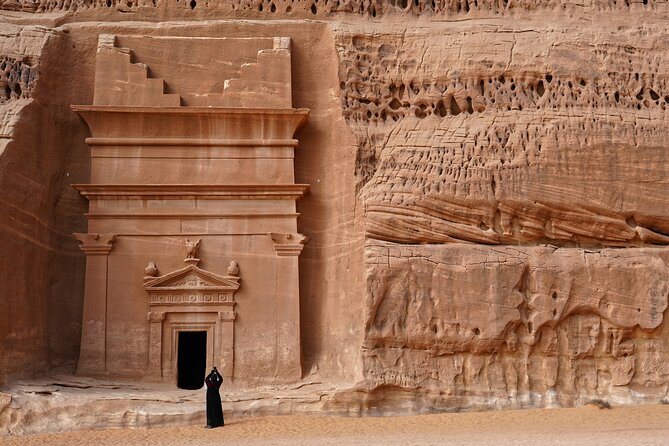
Another layer of the story
Jabal AlAhmar offers another important concentration of Nabataean tombs and a different view of Hegra’s funerary landscape. Each group of monuments has its own scale, position and relationship to the desert around it.
Takeaway: Rather than treating one tomb as the destination, take time at every stop. The meaning of Hegra builds as the route unfolds.
 04
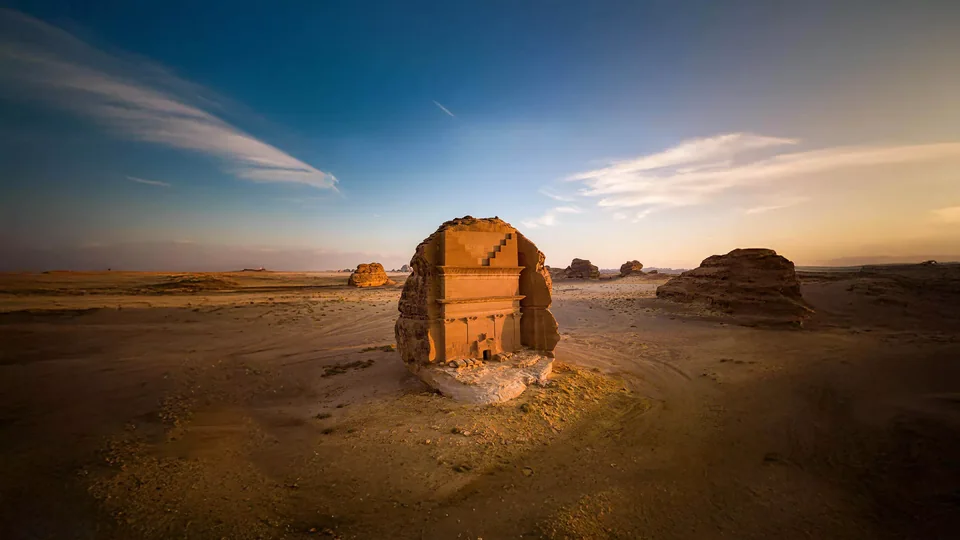
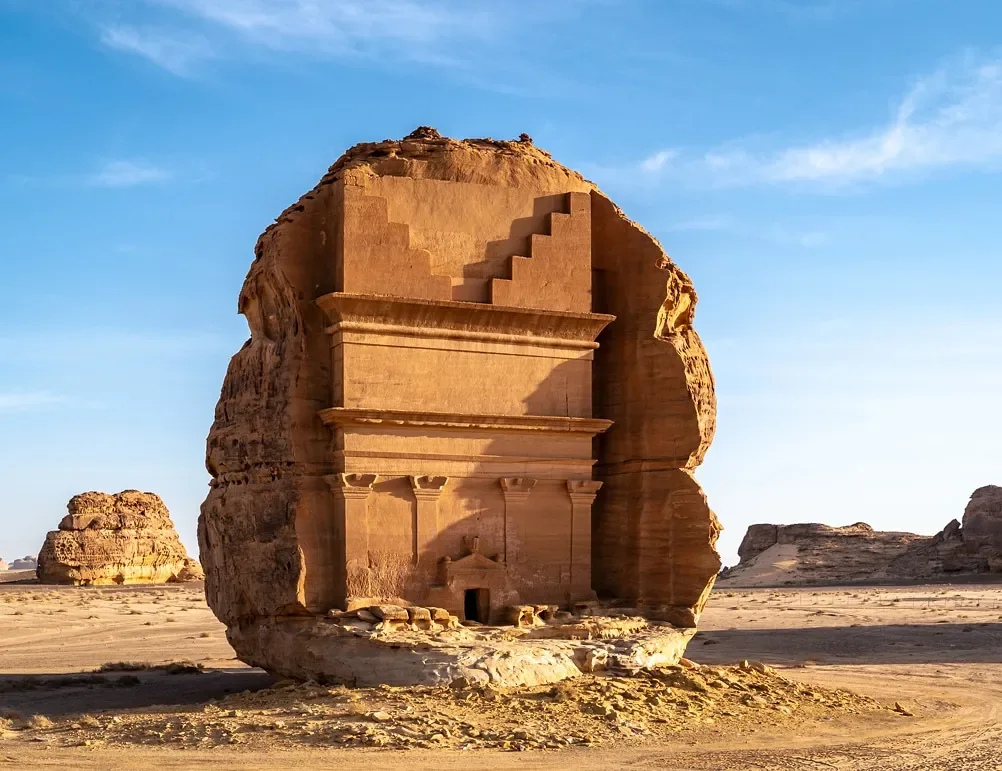
The most iconic tomb at Hegra
Standing alone in the desert, Qasr AlFarid, the Tomb of Lihyan son of Kuza, is Hegra’s most recognizable monument. Its isolated setting and unfinished lower façade make it a memorable final perspective on Nabataean craftsmanship.
Takeaway: It is a remarkable photograph, but it is the full journey through Hegra that gives the monument its context.
Plan with confidence
Hegra is not a site where visitors normally drive themselves between tombs. The archaeological journey is organized by the responsible authority, with official interpretation and internal transportation forming part of the experience.
Your precise arrival point depends on the experience booked. Current official formats may use a designated meeting point such as Winter Park or the Hegra Visitor Centre. Visitors check in before entering the archaeological landscape, and the welcome may include Saudi coffee, dates or a small interpretation space depending on current operations.
When guests explore AlUla privately with Abdullah, he coordinates the wider journey around the scheduled Hegra visit. The official Rawi leads archaeological interpretation inside the protected site in line with current site procedures.

Choosing the experience
Travelers do not need the most expensive format to encounter Hegra’s extraordinary archaeology. The core landscape is remarkable in either style; the difference is principally in privacy, group size and the way you travel through the site.
Shared experience
Best for travelers comfortable visiting alongside other guests, seeking the official standard experience and preferring to keep the cost lower.
Key difference: Transportation is shared with other visitors.
Private / premium experience
Best for couples, families and private parties who value privacy, their own group and a more personal transportation experience within Hegra.
Key difference: Greater privacy and a private vehicle experience within the site.
Availability, formats and prices can change. For the latest official options, reservations and conditions, consult Experience AlUla.
Time and timing
The core archaeological experience is commonly around two hours. Add enough time for arrival, check-in and the start or return arrangements connected to the format you have reserved.
Hegra should not feel rushed. Transport connects the principal stops, but travelers need time to look closely at façades, hear the stories and take in the surrounding desert.
Plan for
This is a practical planning range, not a guaranteed operating duration. The official day tour currently describes 2–3 hours including transfer time.
Abdullah’s perspective
In warmer months, Hegra is most comfortable early or later in the day. In the cooler season, it can work well throughout the day, leaving sunset free for a natural landscape such as Elephant Rock.
Photography
There is no single photography stop that Abdullah considers the only place worth seeing. Every part of Hegra offers a different kind of image: repeating façades at Jabal AlBanat, the tomb groups of Jabal AlAhmar, the architectural perspective of Al Diwan and the classic isolated form of Qasr AlFarid.
Do not save your camera only for Qasr AlFarid. The whole archaeological journey is visually remarkable.
What to bring
Hegra is an open desert archaeological landscape, but it is not a strenuous hike. Transportation connects the major stops and walking sections are generally relatively short. Drinking water is normally available within the visitor experience, though current arrangements should be confirmed.
Families and older travelers
Hegra can be enjoyed by a wide range of travelers, including many families and older visitors. Transportation operates between the principal archaeological stops, while walking at each location is generally limited.
For travelers with specific mobility needs, confirm the current accessibility arrangements directly before visiting. The official experience has changing operational and conservation requirements, so personal requirements are best checked at the time of booking.
Abdullah’s local tip
Independent travelers sometimes focus on getting to Hegra and overlook the journey back to central AlUla. Do not assume Uber or another ride-hailing car will be immediately available when the visit ends. Arrange both directions before you go. If Hegra is part of a private day with Abdullah, transport between your accommodation and the day’s locations is coordinated as part of the wider journey.
Build the wider journey
If you have one day
For a first visit, Abdullah often combines three different sides of AlUla: Hegra for monumental heritage, AlUla Old Town for a historic settlement and Elephant Rock for the desert atmosphere. The exact order should follow the season, your Hegra reservation time and sunset.
If you have two days
A second day gives the wider valley space to unfold. Add Dadan & Jabal Ikmah, Maraya, AlUla Oasis and Harrat Viewpoint to see how ancient kingdoms, inscriptions, contemporary culture and landscape relate to one another.
Explore a two-day private journeyUnderstand the valley
Together, these places show that AlUla was shaped by many civilizations and generations, not by one historical period alone.
Hegra
The monumental Nabataean chapter: rock-cut tombs, inscriptions, wells and a city connected to long-distance trade.
Dadan
A step further back into the valley’s history, associated with the ancient Arabian kingdoms of Dadan and Lihyan.
Jabal Ikmah
A canyon whose ancient inscriptions preserve names, languages and voices of people who lived and travelled through AlUla.
A local guide’s perspective
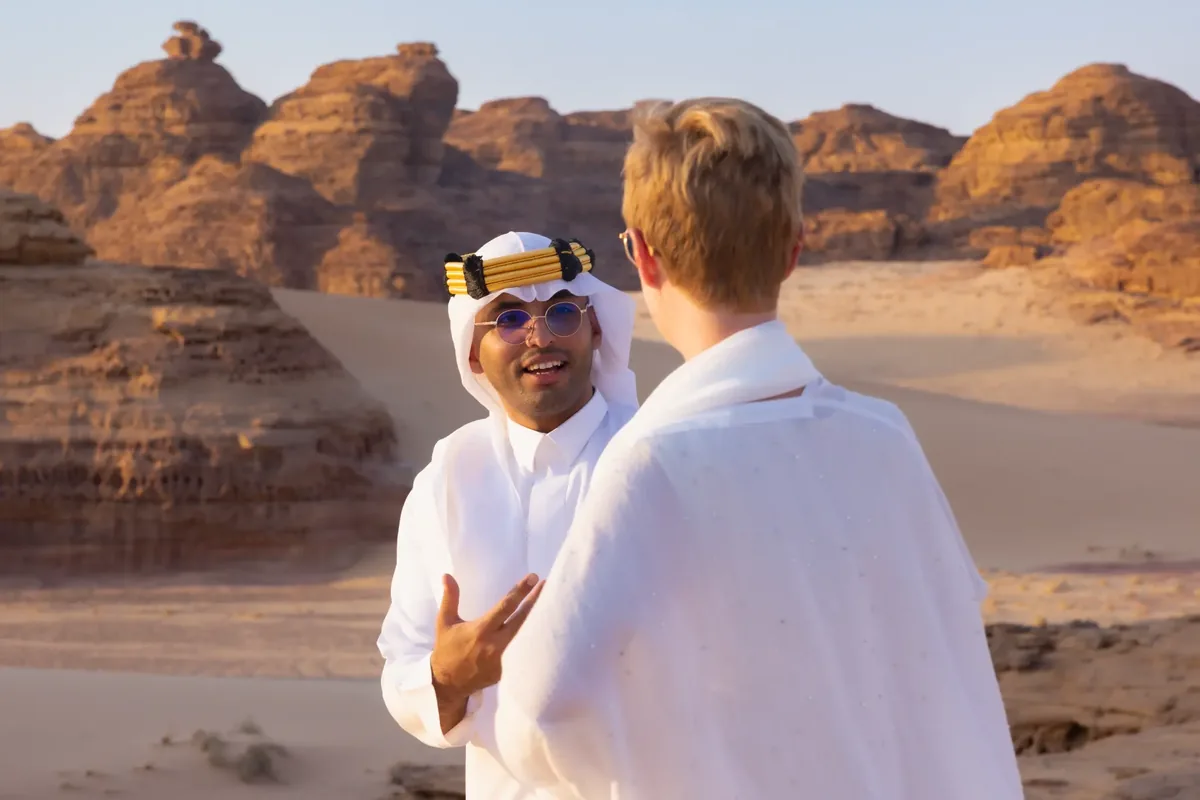
“When I guide visitors through Hegra, I don’t want them to leave thinking they have simply visited a collection of Nabataean tombs. Hegra is part of a much longer story. Its location connected people, trade routes and civilizations across different periods, and the monuments we see today are one remarkable chapter in that story.”
Born and raised in AlUla, Abdullah connects Hegra with Dadan, Jabal Ikmah, the Oasis, Old Town and the living culture of the valley, always at a pace shaped around the guest.
About AbdullahDetails worth noticing
01
Tomb inscriptions can preserve names, family relationships, construction dates and legal arrangements, offering some of the clearest insights into Nabataean society.
02
Evidence from tomb ownership shows that women could own property and participate in economic and legal life. Several tombs at Hegra are associated with women owners or co-owners.
03
Wells and water-management systems show how the Nabataeans supported settlement and agriculture in a desert environment.
04
The archaeological record includes earlier inscriptions and evidence of human activity, reminding visitors that Hegra mattered long before its most famous tombs were carved.
Explore with a local guide
Hegra becomes even more meaningful alongside the other places that shaped the AlUla valley. Abdullah personally leads private experiences that can combine Hegra with Old Town, Elephant Rock, Dadan, Jabal Ikmah, the Oasis and more, according to your available time and interests.
Transportation and the wider journey can be coordinated, while the official Hegra Rawi leads interpretation inside the protected archaeological site.
Practical answers
The essential answers are open and readable for visitors and search engines alike. For current access and product details, always confirm with the official operator before booking.
The core visitor experience is commonly about two hours. Allow extra time for arriving at the designated meeting point or Visitor Centre, check-in and any transfer arrangements. Official experience formats and timings can change, so confirm the current details when reserving.
Hegra operates through an organized visitor experience with official site transportation and interpretation. You can arrange your own transport to the designated meeting point, but it is wise to arrange your return journey in advance as well.
The official Hegra experience includes site interpretation by an AlUla Rawi, or storyteller. When guests explore AlUla privately with Abdullah, he can connect the Hegra visit to the wider day while the official Rawi leads interpretation within the protected site.
Hegra is historically known as Al-Hijr and is widely associated with Mada’in Salih. Hegra is the name commonly used today for the UNESCO archaeological site in AlUla.
Qasr AlFarid is the most recognizable tomb because of its large, isolated and unfinished façade. It is only one part of a route that can also include Al Diwan, Jabal AlBanat and Jabal AlAhmar, subject to current operations.
Current routes may allow visitors into an accessible tomb at Jabal AlBanat. Access can change for conservation and operational reasons, so it should not be considered permanently guaranteed.
For many families and older visitors, yes. Site transport connects the principal stops and walking sections are generally limited. Visitors with particular mobility needs should confirm current accessibility arrangements before booking.
Comfortable walking shoes, lightweight weather-appropriate clothing, a hat and sunglasses are practical choices. Hegra is an open desert archaeological landscape rather than a strenuous hike.
In warmer months, early morning or later in the day is usually more comfortable. During AlUla’s cooler season, the site can often be enjoyed throughout much of the day.
Yes. A first full day can combine Hegra with AlUla Old Town and Elephant Rock. With more time, Dadan, Jabal Ikmah, Maraya, the Oasis and Harrat Viewpoint reveal more of the valley’s story.
Both formats are designed around the same remarkable archaeological landscape. The main differences are privacy, group size and the style of site transportation, rather than access to an entirely different Hegra.
Start with a conversation
Share your travel dates, number of guests and how long you will be staying in AlUla. Abdullah can help shape the wider experience around your available time.
Plan Your AlUla Journey