Private guided experience
Abdullah personally leads a private, conversational walk shaped around your pace and interests.
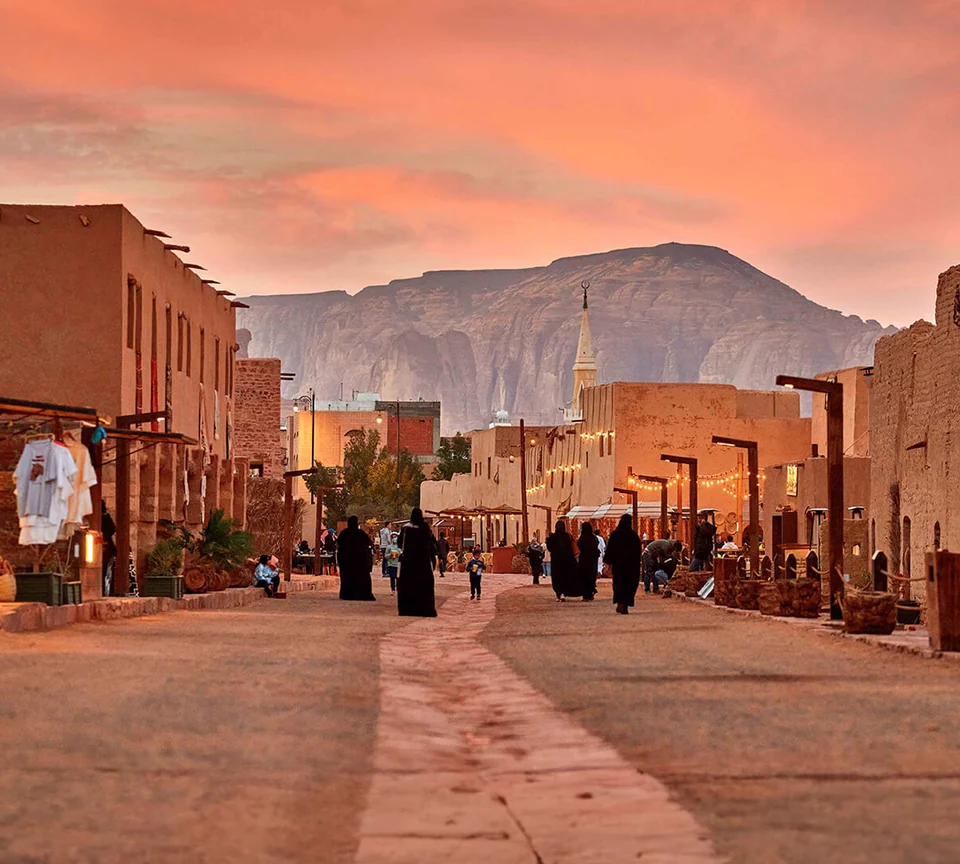
Explore AlUla · Old Town
Walk through narrow historic alleys, discover how local families built their homes and communities around the oasis, visit Tantora and historic mosques, then finish among the shops, cafés and restaurants of the Old Town market.
Start here
Abdullah personally leads a private, conversational walk shaped around your pace and interests.
Allow around 2–3 unhurried hours for the walk, stories and time in the market or nearby cafés.
Abdullah generally recommends later afternoon when guests want to combine history with shops, coffee and dinner.
Walking, architecture, social history, local stories, market browsing and time to slow down.
Local tip: Do not rush away after the historical walk. When time allows, let the market, a coffee or dinner carry the experience into the evening.
A living community
AlUla Old Town is not simply a collection of historic mudbrick houses. It was an interconnected community shaped by the oasis, agriculture, trade, pilgrimage, worship and strong relationships between families and neighbours.
Homes stood closely together. Winding alleys and town squares connected daily routines. The market connected residents with travelers, while water from the oasis made permanent settlement possible. The architecture and the community cannot be separated.
The town developed over generations rather than in one single moment. The exact age of every house is difficult to determine, although documentary evidence associated with Old Town properties reaches back roughly seven centuries.
A private walking journey
The best way to understand Old Town is slowly. Abdullah’s private experience begins at the edge of the settlement and continues through the alleys, architecture and gathering places that shaped everyday life in AlUla. The pace stays flexible, leaving room for questions, photography, shopping and conversation.
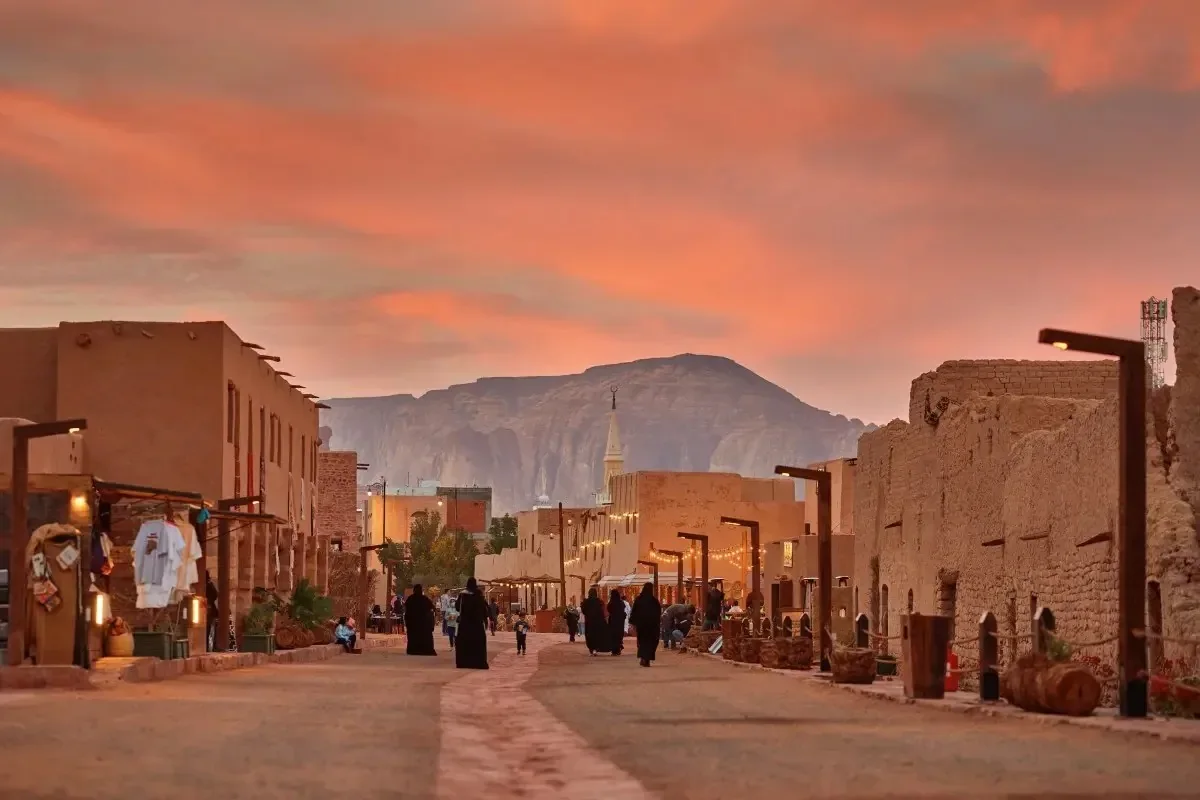 01
Begin at the edge of the historic settlement
Start with the wider view: a compact town beside the oasis, shaped by people, movement and the practical need to live closely together.
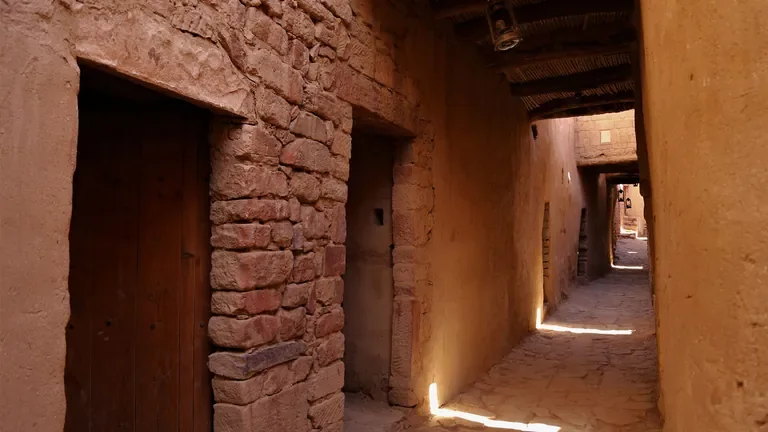 02
Walk the connected lanes slowly
The narrow passages are not simply picturesque. They reveal a dense town where homes, streets and daily routines were closely connected.
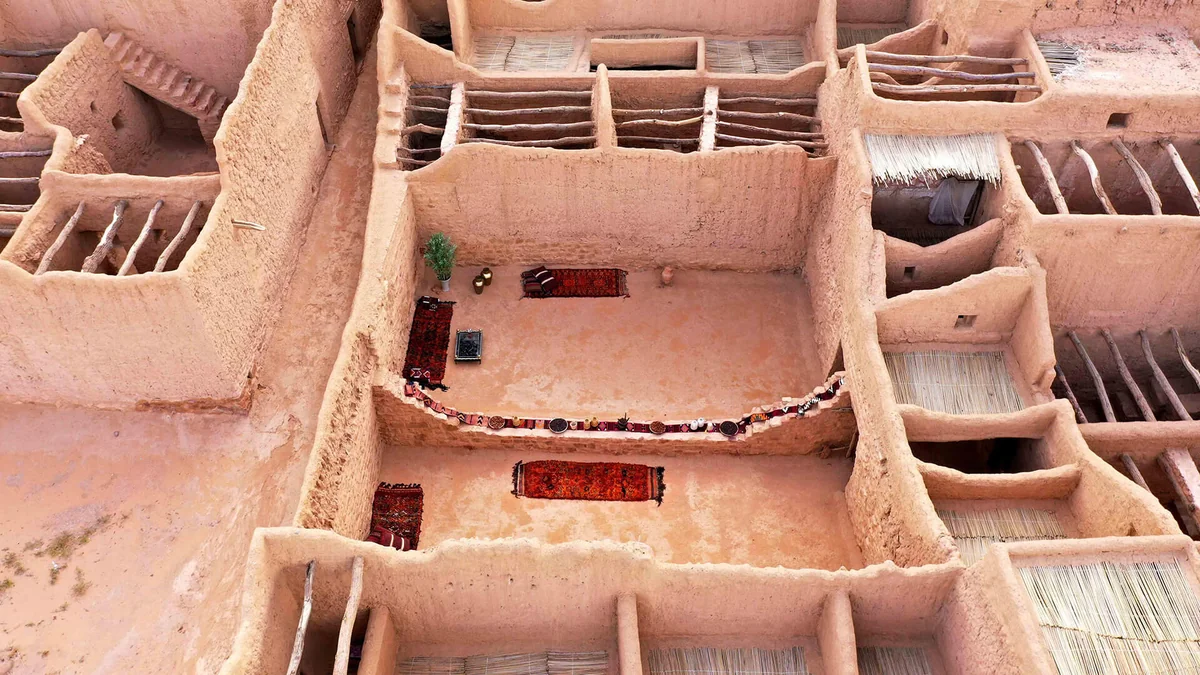 03
Read the town through its materials
Mudbrick, stone and date-palm wood show how local materials formed homes that belonged to the oasis landscape around them.
 04
Time, water and shared rules
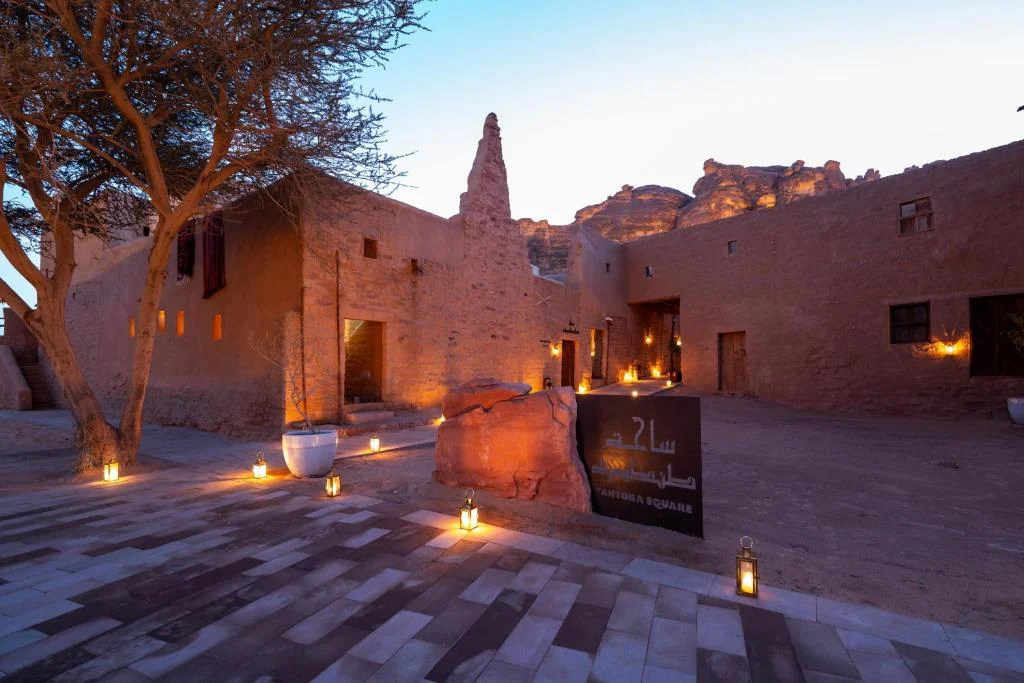
At the town square, Tantora explains how the community connected the seasons with the distribution of water to the farms beyond the walls.
 05
Part of everyday life
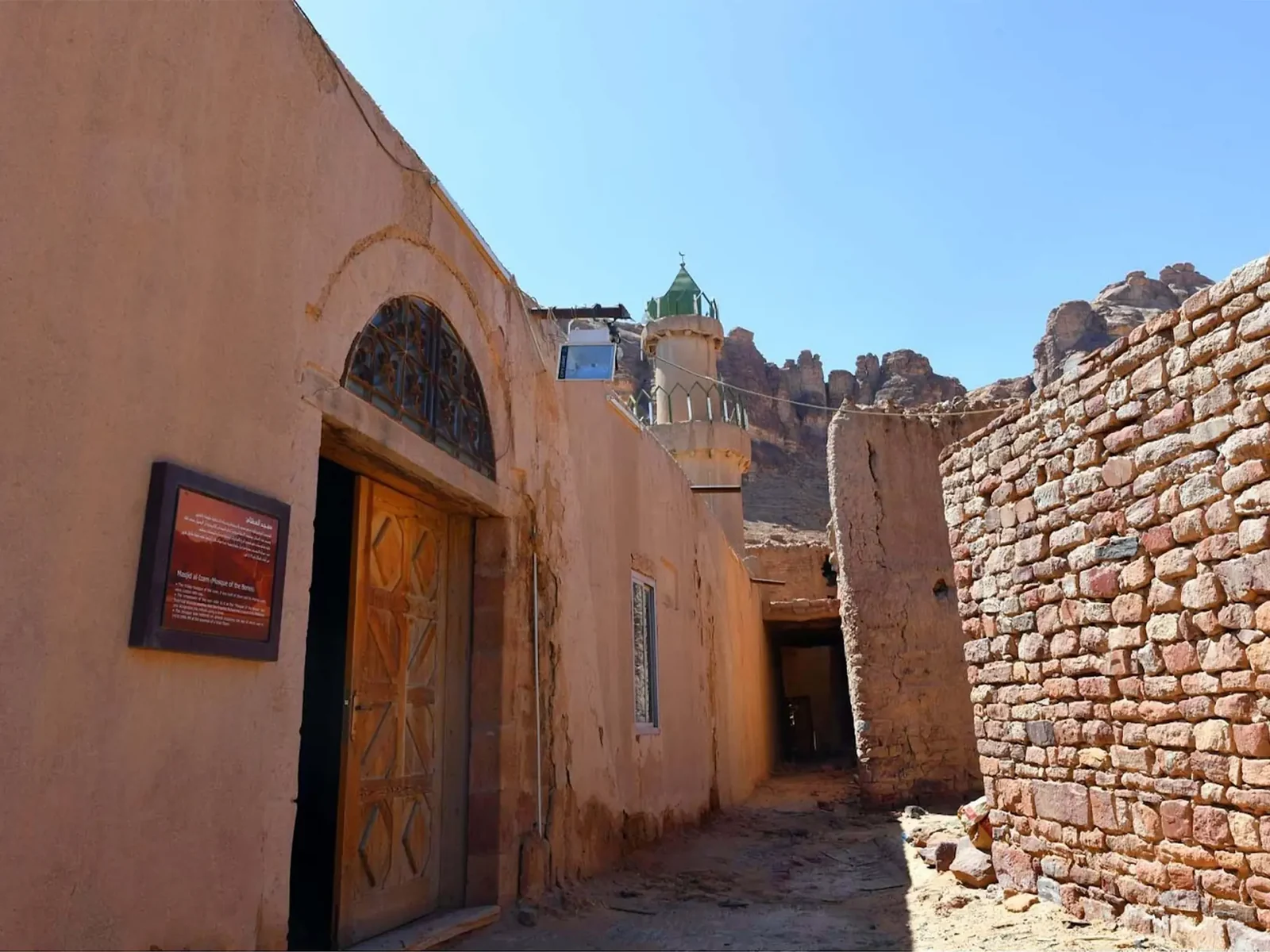
The historic settlement includes five mosques, reminding visitors that worship and community life were woven into the streets and neighbourhoods.
 06
Finish where the town becomes social
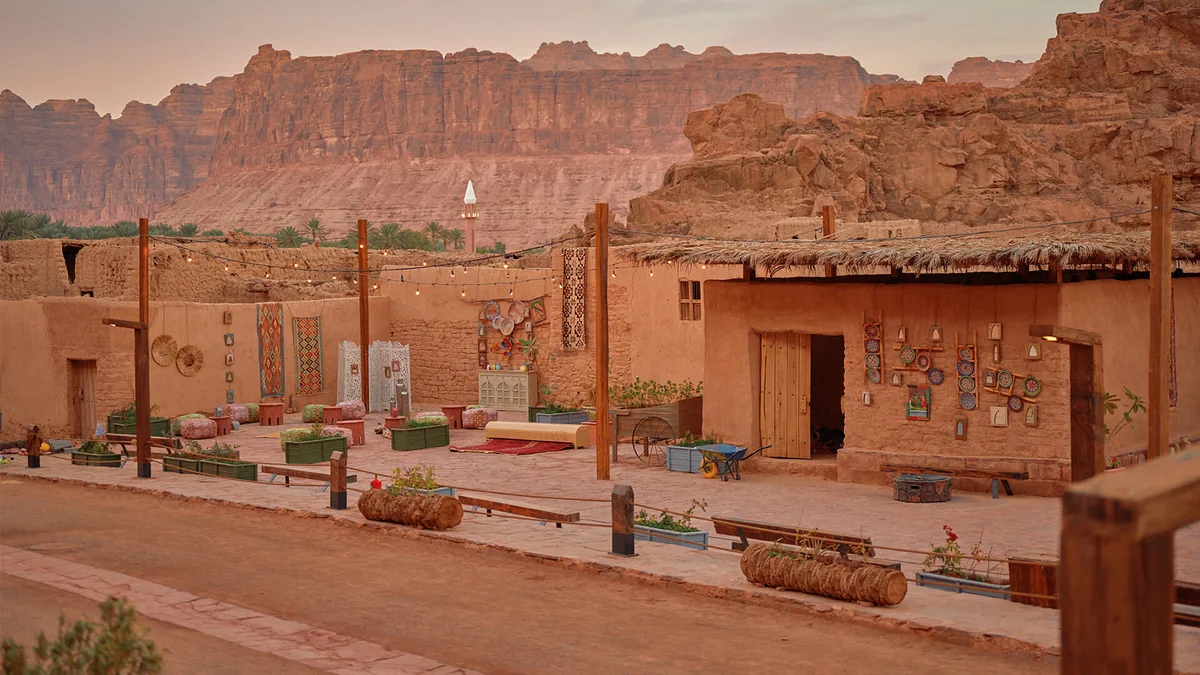
End among the market, shops and cafés, leaving room for a local story, photographs, a coffee or an unhurried dinner nearby.
Living in the desert
Old Town’s historic building palette is local and direct: mudbrick, stone blocks and date-palm wood. It is architecture inseparable from the surrounding oasis and the materials people could work with close to home.
The dense pattern of homes and alleys creates the town’s unmistakable texture. Rather than reading it only as an architectural style, notice it as a record of people living near one another, moving through shared lanes and adapting their settlement to the resources around them.
In some surviving houses, painted mudbrick walls, hand-drawn motifs and personal markings add a more intimate layer. Official interpretation connects some decorative refreshes with weddings and special occasions, reminding visitors that these were homes with family identity and celebration, rather than anonymous historic shells.
Time, water & the oasis
At the edge of Old Town, Tantora helped farmers chart the seasons and regulate the distribution of water to farmland. Its shadow was read against markers to support a system that connected the town with the oasis beyond it.
Tantora was not simply used to tell time. It helped organize life around water.
The oasis made the settlement possible. Groundwater, fertile soil and irrigation supported date palms, agriculture, families, trade and travelers. That required shared rules, cooperation and a community able to manage water with care.
Life between the walls
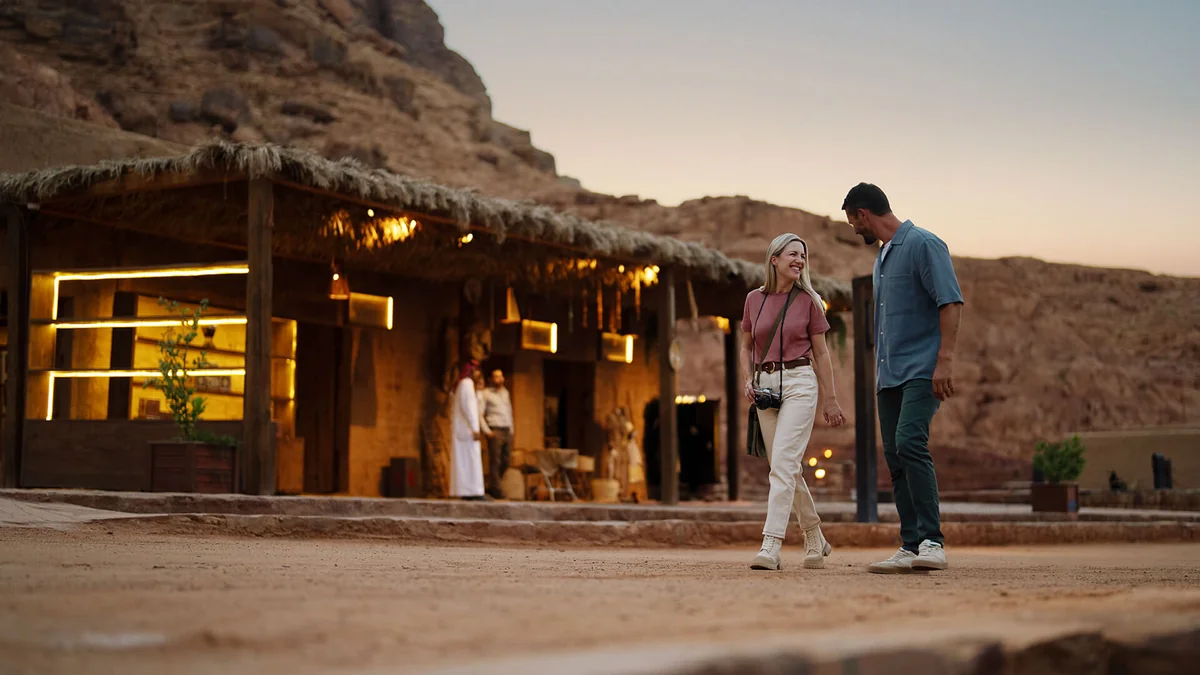
The closeness of the houses reflected the closeness of daily life. Families and neighbours lived near one another, exchanged news in shared spaces and organized ordinary life around the needs of the town and oasis.
Town squares, known as rahbas, gave people room to gather. At Al Darb Square, farmers met as water allocations were organized. The historic mosques, five of which are identified within the settlement, were another reminder that worship and community life belonged to the same walkable fabric.
AlUla also sat within wider movement through the region. Pilgrims and travelers on routes between Damascus and Makkah stopped in the valley for water, supplies and rest, adding trade, hospitality and conversation to the town’s identity.
The social heart of the visit
The historical walk ends naturally in a place where visitors can slow down. Today’s market brings together shops, local products, crafts, gifts, food and coffee in a living visitor setting rather than a museum exit.
Old Town market
Browse slowly rather than treating shopping as an obligation. The market is a good place for local products, crafts, souvenirs and contemporary businesses within the heritage district. Individual shops and hours can change, so leave room for discovery.
Check current market information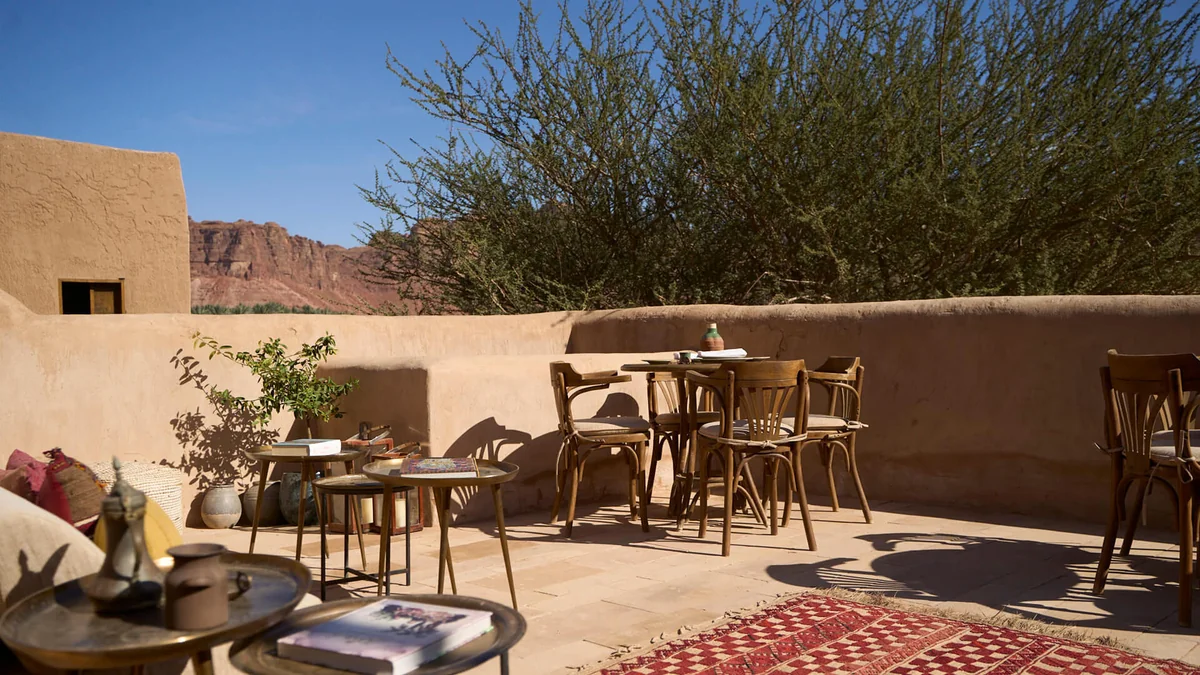
Food & coffee
One of Abdullah’s recommendations is to leave enough time to enjoy the area itself. Sitting over coffee or dinner gives the experience a relaxed ending and often becomes the moment for deeper local conversation.
Old Town & AlJadidah
AlUla Old Town
The historic settlement where generations of AlUla families lived, built their homes, worshipped, traded and organized community life around the oasis.
AlJadidah
The neighbouring contemporary cultural and lifestyle district, known for restaurants, cafés, art, creative spaces and a pedestrian evening atmosphere.
They are not competing attractions. Old Town explains the history; AlJadidah gives travelers somewhere natural to continue the evening.
When residents moved into newer settlement areas in the early 1980s, Old Town remained as a physical record of the homes, families and community life that had shaped the oasis for generations. Its conservation gives visitors a way to read that story today, then continue into modern AlUla nearby.
Read current AlJadidah information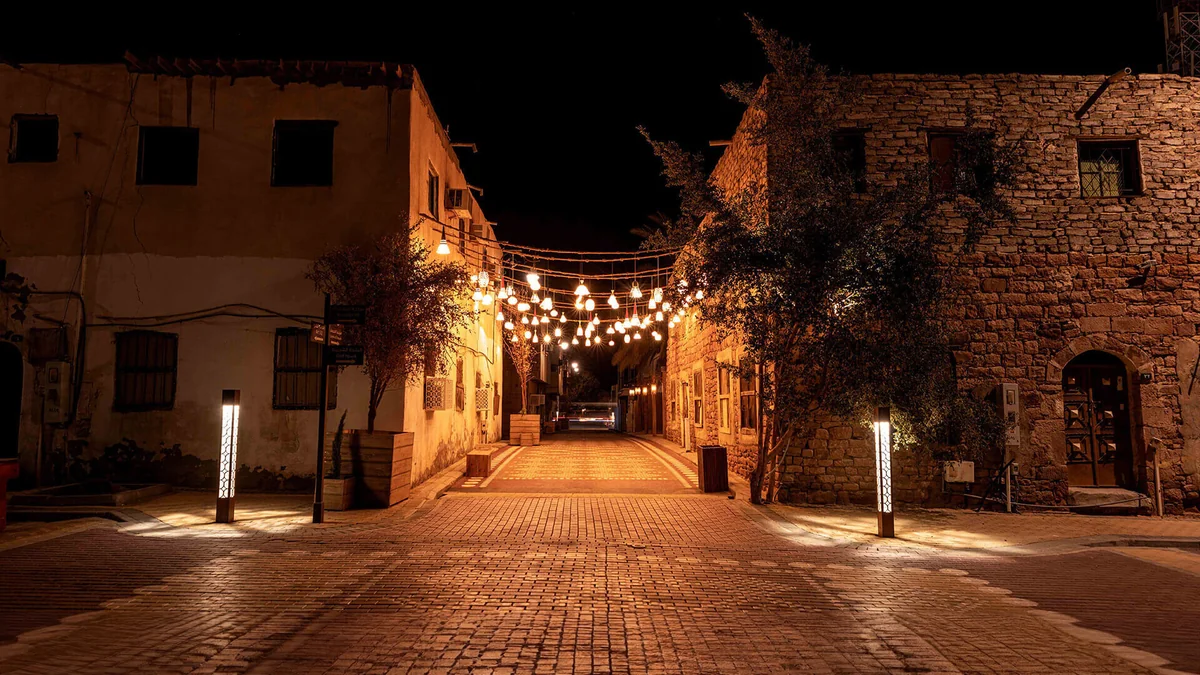
Plan with confidence
For a private Old Town experience, Abdullah generally suggests a generous two-to-three-hour window. Later afternoon is especially rewarding when you want the historical walk to flow into the market, cafés and restaurants. In the cooler season, the same walk can also be comfortable earlier in the day.
Enough time for the alleys, architecture, Tantora, stories and a market walk without moving too quickly.
A practical local recommendation, not an opening-time promise: later hours make it easier to add shops, food and atmosphere.
Families, couples, solo visitors and many older guests can enjoy a relaxed route. Discuss specific mobility needs in advance.
Build the wider journey
For travelers with one full day, three places reveal very different sides of AlUla: Hegra for monumental Nabataean heritage, Old Town for the story of everyday community life, and Elephant Rock for the desert landscape around sunset. The order should follow reservations, the season and your interests.
01 · Hegra
Rock-cut tombs, trade, inscriptions and the Nabataean chapter of AlUla.
Read the Hegra guide02 · Old Town
Families, houses, water, mosques, market life and a community shaped around the oasis.
More time · Dadan & Jabal Ikmah
Ancient kingdoms, Lion Tombs and inscriptions that add another depth to the valley.
Read the Dadan guide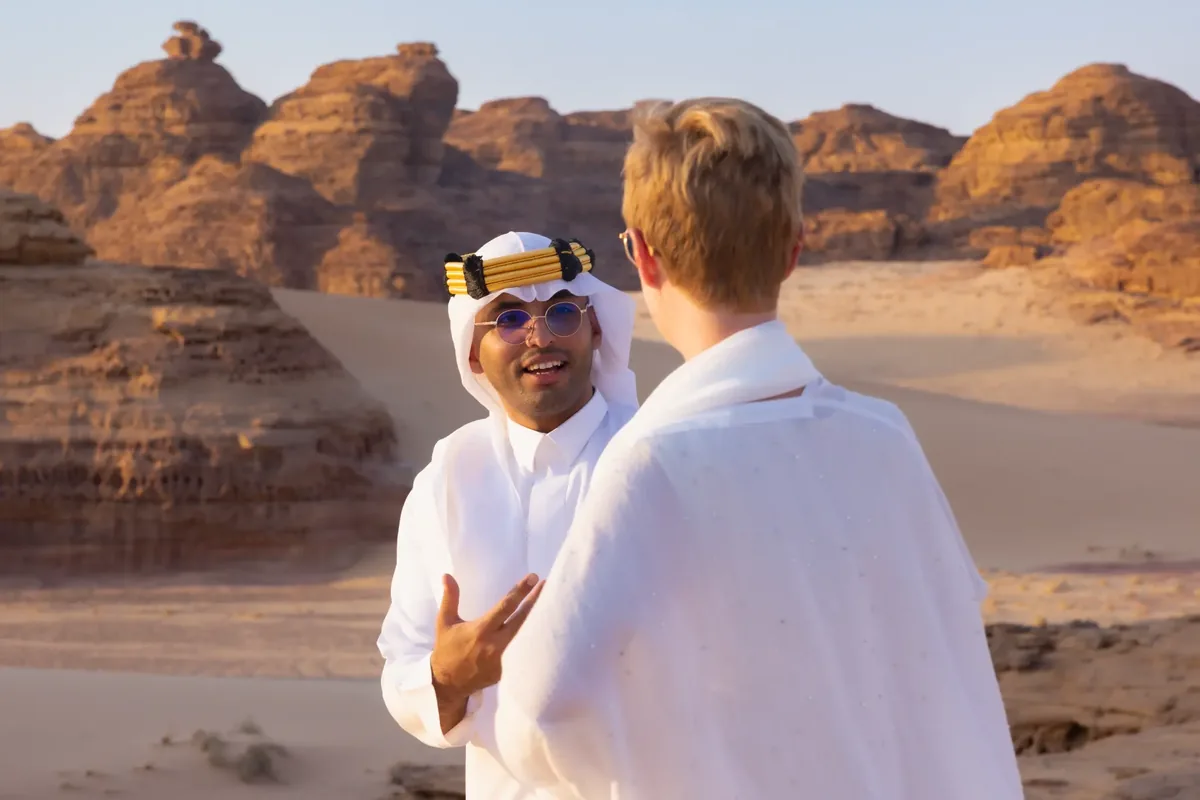
A local guide’s perspective
“When I guide visitors through AlUla Old Town, I want them to see more than old mud-brick houses. This was a living community shaped by the oasis, trade, pilgrimage, family life and strong social ties. The narrow alleys, connected homes, mosques, gathering places and traditional market all tell us how people adapted to the desert and built a close community around water, agriculture and one another. For me, the Old Town is where visitors begin to understand how the people of AlUla actually lived.”
What visitors often miss
01
The compact town reflects local materials and a settlement where homes, lanes and shared spaces were closely connected.
02
The oasis and systems for distributing water shaped agriculture, daily life and the conditions that made permanent settlement possible.
03
Families, neighbours, gathering places and historic mosques helped the settlement function as a closely linked social world.
04
Trade and pilgrimage brought travelers through the valley, making hospitality, supplies and exchange part of Old Town’s wider story.
Explore with a local guide
Old Town is one of the places where local context changes the experience completely. Abdullah was born and raised in AlUla and personally leads private walks that connect the architecture and historical interpretation with local stories and the way community life developed around the oasis.
The pace is private and flexible, leaving room for conversation, photography, shopping and time to enjoy the market afterward.
Practical answers
Clear answers for visitors and search engines. For current access, venue hours and official experience details, check the latest information before you travel.
Abdullah generally recommends around two to three hours for a private guided walk. Allow additional time if you plan to shop, have coffee or stay for dinner afterwards.
A typical private experience includes the historic alleys, traditional houses and architecture, Tantora, historic mosques, the Old Town market and time to explore the surrounding shops and cafés.
The exact age of individual houses cannot always be determined. The settlement developed over generations, and documentary evidence associated with Old Town properties reaches back roughly seven centuries.
It is more accurate to say that documentation connected with Old Town properties reaches back roughly seven centuries. Individual buildings may have changed or been rebuilt over generations.
Tantora is a traditional sundial-like structure associated with Al Darb Square. Its shadow helped the local community chart the seasons and regulate irrigation water allocations to farmland.
For many families and older travelers, yes. Abdullah’s usual experience is a relaxed walking tour. Guests with specific mobility requirements should discuss them in advance so the route can be adapted where possible.
If you want the shops, cafés, restaurants and evening atmosphere to be part of the experience, Abdullah generally recommends later afternoon, from around 4 PM onward. In winter, Old Town can also be comfortable earlier in the day.
Yes. The market is a good place to browse local products, crafts, gifts and souvenirs at an unhurried pace. Individual businesses and opening times can change, so treat the market as part of the walk rather than a fixed shopping list.
Yes. Old Town and nearby AlJadidah have cafés, restaurants and food options. Staying for a coffee or dinner is one of the best ways to let the historical walk continue into the evening.
Old Town is the historic settlement where generations of AlUla families lived, built homes and organized community life. AlJadidah is the neighbouring contemporary cultural and lifestyle district, with cafés, restaurants, art and creative spaces.
Fort access depends on current operations and advance arrangements. Abdullah treats it as an optional addition rather than the central reason to visit; the main value of Old Town is in its streets, homes, Tantora, market and local stories.
Yes. Hegra tells the story of monumental Nabataean heritage, while Old Town helps visitors understand how generations of AlUla families lived, built homes and organized community life around the oasis.
For one full day, Hegra, Old Town and Elephant Rock offer three very different perspectives on AlUla. The exact order should follow your Hegra reservation, the season, sunset and your interests.
You can enjoy the area independently, but a guide adds context about the architecture, water systems, social traditions and local history that may not be immediately visible while walking through the streets.
Start with a conversation
Share your travel dates, number of guests and how long you are staying in AlUla. Abdullah can help connect Old Town with the other places you want to experience.
Plan Your AlUla Journey